Arne - DTC Hero redesign
Making the first impression count: guiding users from curiosity to action
Arne- DTC Hero redesign
Making the first impression count: guiding users from curiosity to action
Arne - DTC Hero redesign
Making the first impression count: guiding users from curiosity to action
1.Context
2.UX Problems
3.Goals
4.Research Insights
5.Solutions & Design dcissions
6.Final Outcome (UX Impact)
1.Context
2.UX Problems
3.Goals
4.Research Insights
5.Solutions & Design dcissions
6.Final Outcome (UX Impact)
1.Context
2.UX Problems
3.Goals
4.Research Insights
5.Solutions & Design dcissions
6.Final Outcome (UX Impact)
1. Context
For direct-to-consumer brands, the hero section is the first interaction users have with your brand.
It answers two critical questions in the first 3–5 seconds:
Why should I care about this brand?
What should I do next?
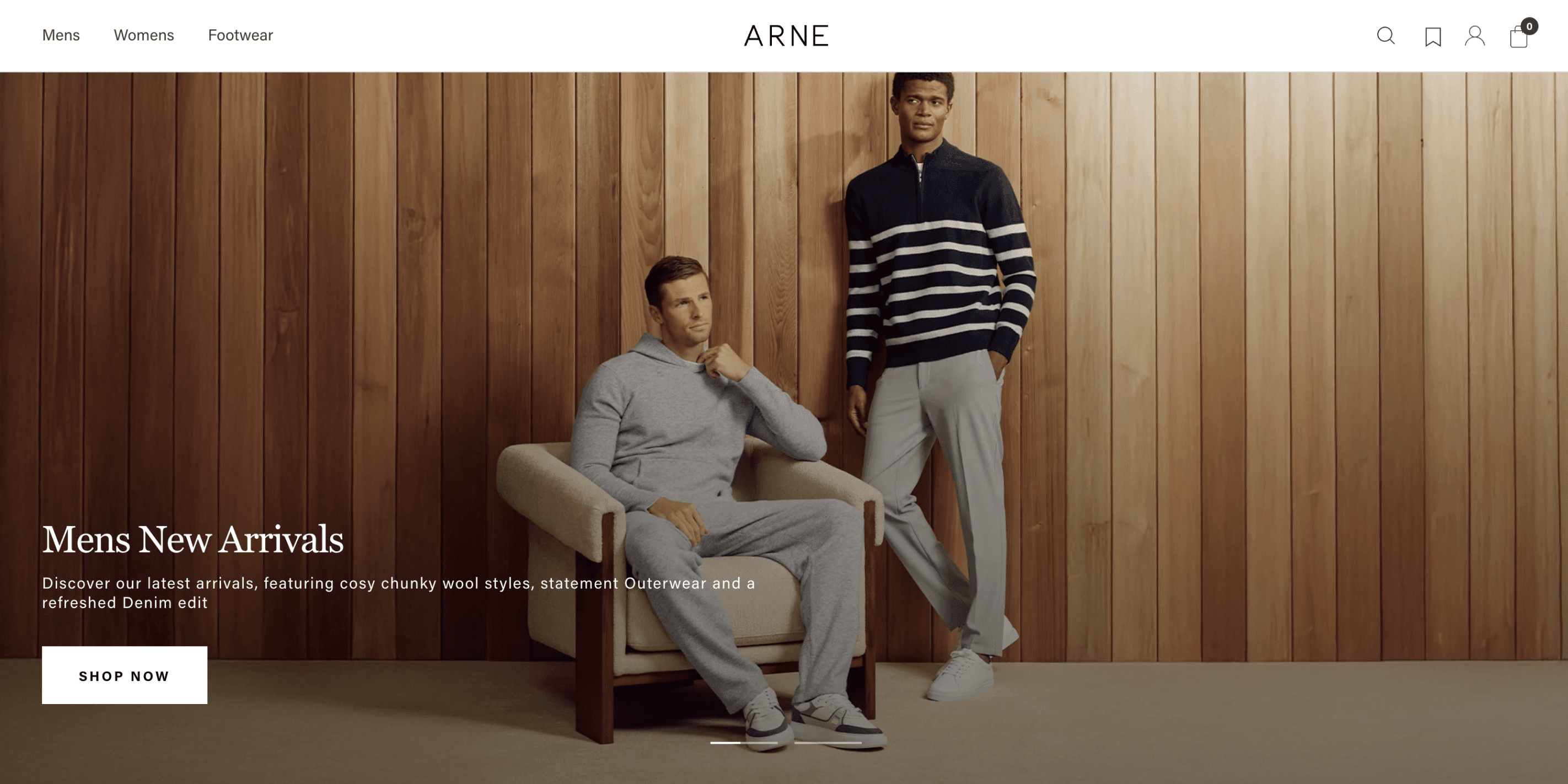
Arneclo’s original hero looked visually fine, but failed to communicate the brand’s strongest differentiator. Users saw a generic headline, a standard CTA, and no trust or USP signals.
Impact: Users were bouncing without engaging — a missed opportunity for conversion.
1. Context
For direct-to-consumer brands, the hero section is the first interaction users have with your brand.
It answers two critical questions in the first 3–5 seconds:
Why should I care about this brand?
What should I do next?
Arneclo’s original hero looked visually fine, but failed to communicate the brand’s strongest differentiator. Users saw a generic headline, a standard CTA, and no trust or USP signals.
Impact: Users were bouncing without engaging — a missed opportunity for conversion.
1. Context
For direct-to-consumer brands, the hero section is the first interaction users have with your brand.
It answers two critical questions in the first 3–5 seconds:
Why should I care about this brand?
What should I do next?
Arneclo’s original hero looked visually fine, but failed to communicate the brand’s strongest differentiator. Users saw a generic headline, a standard CTA, and no trust or USP signals.
Impact: Users were bouncing without engaging — a missed opportunity for conversion.
2. UX Problems
Through review mining (Reddit, Trustpilot, Google), I discovered:
Customers repeatedly highlighted the product’s fit as the reason they bought it.
The hero never mentions fit or quality.
The CTA is generic (“Shop Now”), giving no incentive tied to the USP.
There’s no visual cue or promo bar to build trust immediately.
UX Problem Statement:
Users landing on the hero cannot instantly understand why this brand is worth buying from, nor are they guided to act confidently.
2. UX Problems
Through review mining (Reddit, Trustpilot, Google), I discovered:
Customers repeatedly highlighted the product’s fit as the reason they bought it.
The hero never mentions fit or quality.
The CTA is generic (“Shop Now”), giving no incentive tied to the USP.
There’s no visual cue or promo bar to build trust immediately.
UX Problem Statement:
Users landing on the hero cannot instantly understand why this brand is worth buying from, nor are they guided to act confidently.
2. UX Problems
Through review mining (Reddit, Trustpilot, Google), I discovered:
Customers repeatedly highlighted the product’s fit as the reason they bought it.
The hero never mentions fit or quality.
The CTA is generic (“Shop Now”), giving no incentive tied to the USP.
There’s no visual cue or promo bar to build trust immediately.
UX Problem Statement:
Users landing on the hero cannot instantly understand why this brand is worth buying from, nor are they guided to act confidently.
3. Goals
Highlight the brand’s USP (Fit + Quality) immediately.
Guide users toward the next action with a CTA aligned to the USP.
Anchor trust with a subtle, informative promo bar.
These goals are user-centered — focusing on clarity, comprehension, and conversion intent rather than just visual polish.
3. Goals
Highlight the brand’s USP (Fit + Quality) immediately.
Guide users toward the next action with a CTA aligned to the USP.
Anchor trust with a subtle, informative promo bar.
These goals are user-centered — focusing on clarity, comprehension, and conversion intent rather than just visual polish.
3. Goals
Highlight the brand’s USP (Fit + Quality) immediately.
Guide users toward the next action with a CTA aligned to the USP.
Anchor trust with a subtle, informative promo bar.
These goals are user-centered — focusing on clarity, comprehension, and conversion intent rather than just visual polish.
Before the revamp
Before the revamp
Before the revamp
4. Research Insights
User reviews consistently point to fit as the main reason for purchase.
DTC buyer behavior: quick decision-making, emotional cues, skim-reading hero content.
UI/UX gap: Hero content did not match real user priorities, leading to confusion and bounce.
4. Research Insights
User reviews consistently point to fit as the main reason for purchase.
DTC buyer behavior: quick decision-making, emotional cues, skim-reading hero content.
UI/UX gap: Hero content did not match real user priorities, leading to confusion and bounce.
4. Research Insights
User reviews consistently point to fit as the main reason for purchase.
DTC buyer behavior: quick decision-making, emotional cues, skim-reading hero content.
UI/UX gap: Hero content did not match real user priorities, leading to confusion and bounce.
5. Solutions & Design Decisions
A. USP-First Headline
Rewrote headline to reflect real user language: e.g., “The Perfect Fit, Every Time.”
Clearly communicates the primary reason users care — fast comprehension reduces bounce.
B. CTA Alignment
Original CTA: “Shop Now” → vague, low intent.
New CTA: “Find Your Perfect Fit” → reinforces the USP and guides action.
UX principle: CTA should close the loop of the headline, reinforcing the reason to click.
C. Promo Bar for Trust & Value
Added subtle value/assurance bar above the hero.
Provides social proof or shipping reassurance.
Reduces hesitation and improves confidence before engagement.
D. Visual Hierarchy & Layout
UI changes are supporting UX goals:
Headline is prominent
CTA visually distinct
Promo bar draws initial attention
Flow directs eye movement: value → trust → action
5. Solutions & Design Decisions
A. USP-First Headline
Rewrote headline to reflect real user language: e.g., “The Perfect Fit, Every Time.”
Clearly communicates the primary reason users care — fast comprehension reduces bounce.
B. CTA Alignment
Original CTA: “Shop Now” → vague, low intent.
New CTA: “Find Your Perfect Fit” → reinforces the USP and guides action.
UX principle: CTA should close the loop of the headline, reinforcing the reason to click.
C. Promo Bar for Trust & Value
Added subtle value/assurance bar above the hero.
Provides social proof or shipping reassurance.
Reduces hesitation and improves confidence before engagement.
D. Visual Hierarchy & Layout
UI changes are supporting UX goals:
Headline is prominent
CTA visually distinct
Promo bar draws initial attention
Flow directs eye movement: value → trust → action
5. Solutions & Design Decisions
A. USP-First Headline
Rewrote headline to reflect real user language: e.g., “The Perfect Fit, Every Time.”
Clearly communicates the primary reason users care — fast comprehension reduces bounce.
B. CTA Alignment
Original CTA: “Shop Now” → vague, low intent.
New CTA: “Find Your Perfect Fit” → reinforces the USP and guides action.
UX principle: CTA should close the loop of the headline, reinforcing the reason to click.
C. Promo Bar for Trust & Value
Added subtle value/assurance bar above the hero.
Provides social proof or shipping reassurance.
Reduces hesitation and improves confidence before engagement.
D. Visual Hierarchy & Layout
UI changes are supporting UX goals:
Headline is prominent
CTA visually distinct
Promo bar draws initial attention
Flow directs eye movement: value → trust → action
After the revamp
After the revamp
After the revamp
Mens
Womens
Footwear




GET FREE SHIPPING & FREE RETURNS WITH $200 PURCHASE

Clothes that earn compliments in cafes and survive the subway ride home
Find your FIT
Mens
Womens
Footwear
GET FREE SHIPPING & FREE RETURNS WITH $200 PURCHASE
Clothes that earn compliments in cafes and survive the subway ride home
Find your FIT
Mens
Womens
Footwear
GET FREE SHIPPING & FREE RETURNS WITH $200 PURCHASE
Clothes that earn compliments in cafes and survive the subway ride home
Find your FIT
6. Final Outcome (UX Impact)
Users immediately understand the brand’s strongest differentiator.
CTA is now actionable and contextually meaningful.
The hero section guides user behavior, reducing bounce and increasing conversion likelihood.
The page now communicates trust, value, and next steps without overwhelming the user.
Result: Not just a prettier hero — a strategic UX improvement that solves the “why choose this brand?” problem.
6. Final Outcome (UX Impact)
Users immediately understand the brand’s strongest differentiator.
CTA is now actionable and contextually meaningful.
The hero section guides user behavior, reducing bounce and increasing conversion likelihood.
The page now communicates trust, value, and next steps without overwhelming the user.
Result: Not just a prettier hero — a strategic UX improvement that solves the “why choose this brand?” problem.
6. Final Outcome (UX Impact)
Users immediately understand the brand’s strongest differentiator.
CTA is now actionable and contextually meaningful.
The hero section guides user behavior, reducing bounce and increasing conversion likelihood.
The page now communicates trust, value, and next steps without overwhelming the user.
Result: Not just a prettier hero — a strategic UX improvement that solves the “why choose this brand?” problem.